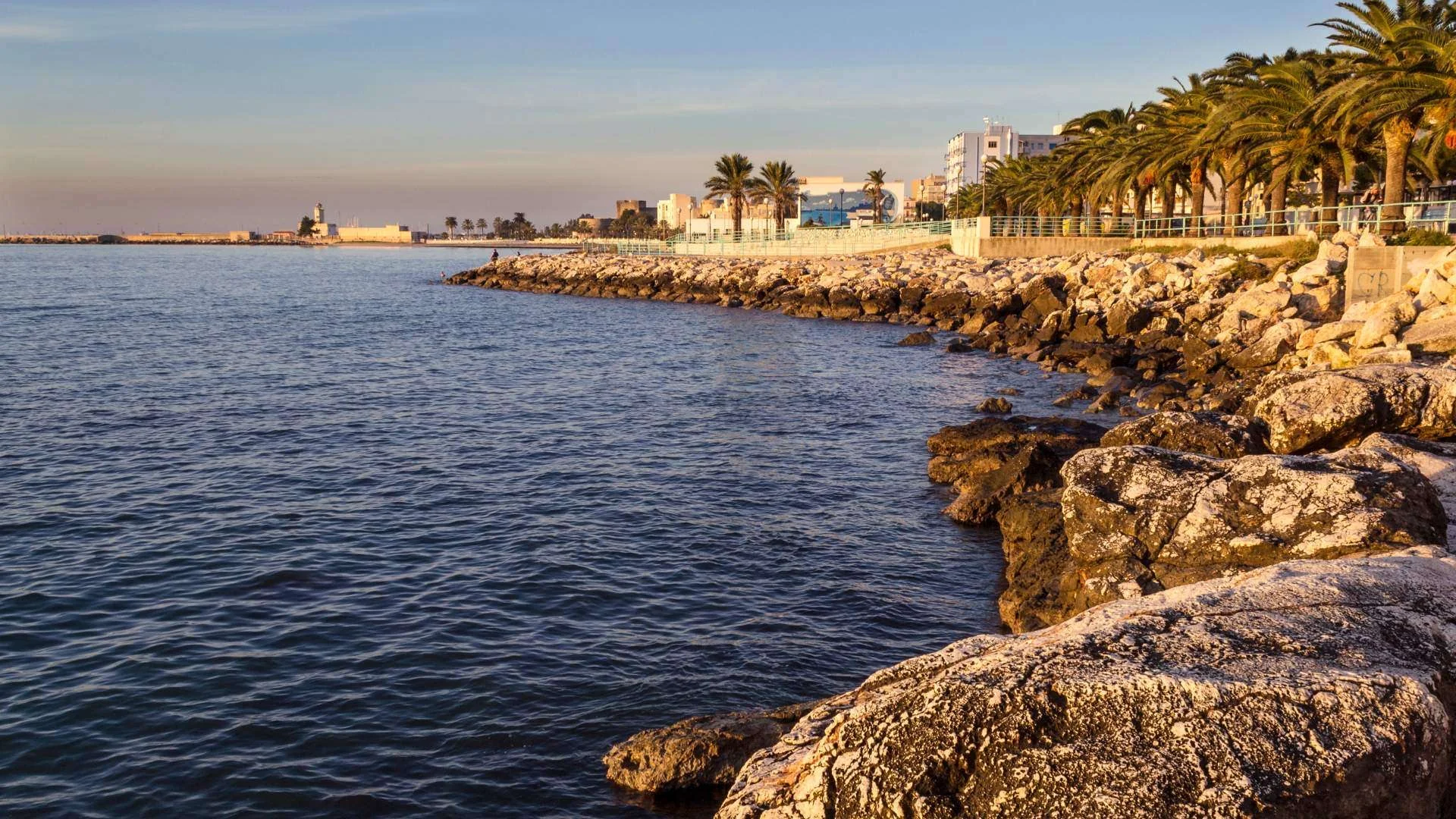
Some places exist differently depending on who is describing them. For tourists, the Tremiti Islands are the most beautiful beaches in the Adriatic, a sea so blue it looks almost too saturated to be real, sea caves to photograph with a phone. For Lucio Dalla they were something more intimate: a refuge, the place to disappear to in summer, his island in the most literal sense of the word. He had a house on San Domino and returned every year — not for a holiday, but to be.
From Manfredonia the Tremiti are within ferry reach. In summer 2026 the direct line is back: a return ticket for €24, a few hours of open Adriatic, and you arrive at an archipelago that technically belongs to Puglia but feels like somewhere else entirely. A place with no roads, no cars, almost nothing you recognise as ordinary.
Two islands, two characters
The Tremiti archipelago has two inhabited sides, so different that it seems impossible they are just ten minutes apart by small boat.
San Nicola is the rocky one. An island with no beaches — only cliffs, walls and history compressed onto a handkerchief of stone. At its centre stands the Abbey of Santa Maria a Mare, founded by Benedictine monks in the eleventh century, with a floor scattered with fragments of ancient mosaics and an atmosphere that has nothing touristy about it. The Venetian walls encircling the village are almost intact, the alleyways are narrow and white, cats are everywhere. You reach it by ferry or small boat from San Domino: it deserves at least two hours of unhurried wandering, with no rush to get anywhere.
San Domino is the lively one. The largest, the only one with real vegetation — a forest of maritime pines that smells unlike anything on the mainland. It has beaches, woodland paths, sea caves and bars open in the evening. This is where Lucio Dalla had his house, and where the island comes alive each summer with an energy that never tips into chaos: the Tremiti are too small and too far from the mainland to handle the numbers you find in Vieste or Riccione.
San Domino or San Nicola: which island do you arrive at?
It is the question almost everyone asks before setting off, and the practical answer is simple: ferries and hydrofoils dock at San Nicola, the historic gateway to the archipelago. From there a taxi-boat service links the two islands in a few minutes, with frequent runs throughout the day: hopping from one island to the other is not a logistical problem, it is part of the trip.
The real difference is what you find once you step off. San Nicola, where you dock, is the island to visit: the medieval abbey, the Venetian walls, the stone alleyways, history compressed onto a handkerchief of rock. It has no beaches, but you can walk it in a couple of hours. San Domino, a few minutes away by taxi-boat, is the island where you stay: the beaches, the coves, the pine forest, the paths, the sea caves, the restaurants and the only real accommodation in the archipelago.
In practice you do not have to choose: you land at San Nicola and devote part of the day to San Domino with the taxi-boat. Visit the abbey and the village while your energy is fresh, then cross to San Domino for the beaches and sea caves in the afternoon.
Ferry timetable and fares Manfredonia–Tremiti 2026
For summer 2026 the Province of Foggia awarded the coastal service to C.T. Peschici Srl, running it for the fifth year in a row with the motor vessel Elia Jet. These are the official times and fares.
Two practical details that matter. First: there are no sailings on Thursday, so if you only have one free day, check it doesn't fall on a Thursday. Second: sailings cancelled for bad weather can be made up between 26 August and 30 September, but do not rely on this to plan a trip — if the sea is rough, think of a plan B in advance.
The taxi-boat between San Domino and San Nicola costs a few euros each way and takes about ten minutes: with departure at 7:30 and return at 17:30 you still have time to see both islands.
The sea of the Tremiti
You have to be honest: the sea around the Tremiti Islands is a different sea from what you see off Manfredonia or from the beaches of the Gargano. It is not about beauty — the Gargano coastline is beautiful too. It is about water quality: the Tremiti are surrounded by Posidonia oceanica, underwater meadows that filter and oxygenate, and it shows. Visibility is ten, fifteen metres. The seabed is alive — urchins, octopuses, groupers, species that in more frequented waters can barely be found any more.
The sea caves of San Domino are the main reason it is worth renting a small boat or joining an excursion as soon as you arrive at the port. The Grotta delle Viole, the Grotta del Bue Marino, the Grotta delle Rondinelle: names that sound like chapter titles from a book written by erosion over thousands of years. You enter swimming or by rowing boat: light filters through the water and paints the walls a blue that is difficult to describe to anyone who has not seen it.
Snorkellers and divers find here one of the most intact seabeds in the Adriatic. The diving centres on the island organise outings for all levels, from beginner to certified diver. Expert knowledge is not essential: even on the surface, with just a mask, you see enough to remember for a long time.
Lucio Dalla and the Tremiti
Lucio Dalla did not love fashionable places. He loved places where people lived for real — Bologna in winter, the Tremiti in summer. His house on San Domino was his counterweight to the world of Italian show business: no interviews, no stages, no schedules. Just the sea, the pines, the sunsets from the other side of the island.
He used to say that the Tremiti were the place where he could hear songs before writing them — that phase when a melody is not yet music but is already something, a physical sensation you carry around for days. Something of that quality can still be felt on the island: the silence is not empty, it is full of a background noise made of waves, wind, plants. A place that works on you if you give it time.
On San Domino there is still a bar that bears his name. The older locals remember him as a quiet guest — someone who greeted people, ordered, walked around, without ever stopping observing. The kind of visitor that a small island appreciates more than any other.
How to organise your day
The ferry from Manfredonia arrives at San Nicola in the morning and departs again at 17:30. So you have the archipelago at your disposal for the whole day. With a full day you can do almost everything: visit San Nicola, spend time on a beach on San Domino, take a small boat to the caves or get in your first hours of snorkelling. The logistics are simple because the islands are small and almost everything is on foot.
The advice of those who have been several times: land at San Nicola, visit the abbey and the alleyways while your energy is fresh, then take the taxi-boat to San Domino. An afternoon on the beach is more restful after a morning of history, and you will not have to rush for the return ferry.
Staying a night (or more)
A day is enough to understand the Tremiti. It is not enough to feel them. Those who stay the night on the island — and the accommodation on San Domino is small but exists — say the experience is completely different. In the evening, once the day-tripper boats have left, the island starts breathing again. The restaurants half-empty, the stars are visible as almost nowhere on the mainland, the sound of the sea is the only sound.
For those who prefer to return each evening to a place with more comfort and more choice — restaurants, aperitivo bars, a market, a city around them — Manfredonia is the right base. Board the ferry in the morning and step off in the evening, with the whole Gargano at hand for the days when the Tremiti are not calling. The week on the Gargano that we recommend starts from exactly this logic: one fixed place, many destinations reachable in a day.
When to go
The direct ferry from Manfredonia runs from July: it is the right season for a first visit, with the sea already warm and all the services on the island open. July is the most balanced month: still before the Ferragosto peak, the beaches are manageable and you can still find places on cave excursions without booking weeks ahead.
August on the island is busy — not chaotic like Rimini, but busy by Tremiti standards, which are those of a place that has a few hundred permanent residents. Prices rise, excursions need booking, small boats are competed over. Those who can, should go in September: the water is still warm, the light is different — more horizontal, more golden — and you encounter an island that has already worked through the season and is finding itself again.
Frequently asked questions about the Tremiti Islands
How do you get to the Tremiti Islands from Manfredonia?
In summer 2026 the Manfredonia–Tremiti Islands ferry runs from 25 July to 25 August, one sailing a day, every day except Thursday. It departs at 7:30 from the Molo di Ponente in Manfredonia and returns from San Nicola at 17:30. A return ticket costs €24, one way out €13, one way back €11. The service is run by C.T. Peschici Srl with the motor vessel Elia Jet; book at garganometromarine.it or on 348 656 0455.
Which islands make up the Tremiti archipelago?
The inhabited islands are San Domino (the largest, with beaches, a pine forest and sea caves) and San Nicola (rocky, with the medieval abbey and the Venetian fortress). Capraia and Cretaccio are uninhabited. Pianosa is part of the archipelago but not reachable on ordinary tours.
What can you do on the Tremiti Islands in one day?
In a single day you can visit San Nicola on foot, spend time on a beach on San Domino and, if the timetable allows, take a small boat trip to the sea caves. Anyone wanting to snorkel properly or explore more caves should stay at least one night.
What is the connection between Lucio Dalla and the Tremiti Islands?
Lucio Dalla loved the Tremiti Islands and spent long periods there every summer. He had a house on San Domino and described them as one of the few places where he could completely switch off. On San Domino there is still a bar that bears his name, and older locals remember him as a quiet, faithful guest.
Is it better to arrive at San Domino or San Nicola?
Ferries from Manfredonia dock at San Nicola, the historic gateway to the archipelago, with its medieval abbey and Venetian walls. San Domino — the one with the beaches, a pine forest, restaurants and accommodation — is a few minutes away on the taxi-boat that links the two islands all day. You do not really have to choose: you land at San Nicola and devote part of the day to San Domino.
How much does the Manfredonia–Tremiti connection cost?
For the 2026 season the official fares are €24 for a return ticket, €13 one way out and €11 one way back. The taxi-boat between San Domino and San Nicola costs a few euros each way. The sailing departs from Manfredonia at 7:30 and returns from San Nicola at 17:30, every day except Thursday, from 25 July to 25 August.
When is the best time to visit the Tremiti Islands?
July is the most balanced month: the ferry from Manfredonia is running, the sea is warm and the islands have not yet reached their August peak. September is wonderful: fewer people, sea still warm, prices down. June is possible but you need to board from Vieste or Peschici — sailings from Manfredonia start in July.